
What is Piles?
Piles is often feared as the tumour of the anus.
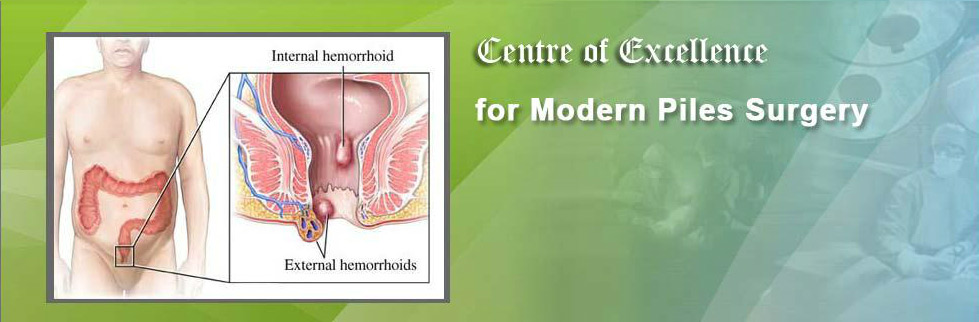
Actually, piles is not tumourous and not dangerous. It is a simple enlarged
/ engorged blood vessel(s) of the anus. It is also called haemorrhoids in
medical terminology. It is the dilatation (varicosity) of the haemorrhoidal
plexus (veins of anus). It appears as bluish or purple coloured swellings
due to stagnated blood. Piles may cause symptoms like bleeding, itching,
pain and lump feeling in the anus.
Blood vessels are supposed to suffer with varicosity, when there is
obstruction or resistance/ sluggish or reduced or back flow of blood /
valvelessness, etc. Varicosity is often noticed in the legs of pregnant
women or policemen or in persons whose job/habit is to stand continuously
for a prolonged period. Veins of the legs are most commonly affected with
varicosity, since it is the most dependent part of the body, where the
gravitational force constantly gives pressure with stagnation. Other than
varicosity of legs, the next commonest spot of varicosity is the anus since
it has a cluster of loosely supported blood vessels anastamosing (joining)
systemic & portal (liver) circulation. These blood vessels have no valves to
avoid back flow and is more prone to varicosity.
Piles patients mostly suffer silently with their complaints due to shyness
to explain or show the thing to the doctor. They bear the pain and
complaints as far as possible and go for treatment only in unbearable
conditions, which usually leads them directly to the surgeon’s table. Every
complaint should be treated then and there, for easy cure and to avoid
progress of the disease into complications. Also, nowadays piles is often
misspelled for all anal complaints (fissures, fistulas, rectal tumours,
prolapsed anus, etc.) Every complaint should be clearly analysed by
examination and investigation before being diagnosed and treated.
Incidences – Piles is very commonly seen nowadays. Women have higher
incidence than men. The reason behind it is not clearly known. It is more
commonly seen in adolescent age group and aged persons who all seem to be
more tensed. There must be a relation between piles and
tension/psychological factors. Its incidences is more common in persons who
deviate more from nature in diet, living style and sitting habits. Sufferers
are mostly
|
Anal
architecture - is designed in such a manner to control even the release of
air (flatus) and watery stools i.e., airtight and leak-proof. It is
well-formed with internal sphincter and external sphincter muscles. Anal
canal is anatomically divided into two parts (namely upper part and lower
part) by Hilton’s line (bluish pink ring). This upper anal part originates
from the endoderm and is covered with mucous membranes. The nerve supply of
the upper part is supplied from the autonomic nervous system which doesn’t
have any pain sensitive nerve fibres. The lower part of the anal canal
originates from ectoderm and is covered by skin. Unlike the upper part, it
is supplied by spinal nerves which have pain sensitive nerve fibres. The
blood supply to upper part of the anus is supplied by superior haemorrhoidal
plexus and the lower part is supplied with inferior haemorrhoidal plexus.
The occurrence of swelling/varicosity in the anus (piles) is more common in
3 O’, 7 O’ & 11 O’ clock position of anus which are all supposed to be weak
points of the anus.
Quick Link
Services Offered
|
|
Piles Surgery | |
|
|
||
|
|
||
|
|
||
|
|
||
|
|
||
|
|
Hernia Surgery | |
Our Address
Centre of Excellence
Ravi Surgical Hospital
Station Road , Maninagar,
Ahmedabad - 380 008
Gujarat, INDIA
|
|
+91 79 6605 3679 |
|
|
+91 79 2546 3679 |
|
|
09825064767 |
|
|
